📋 Contents
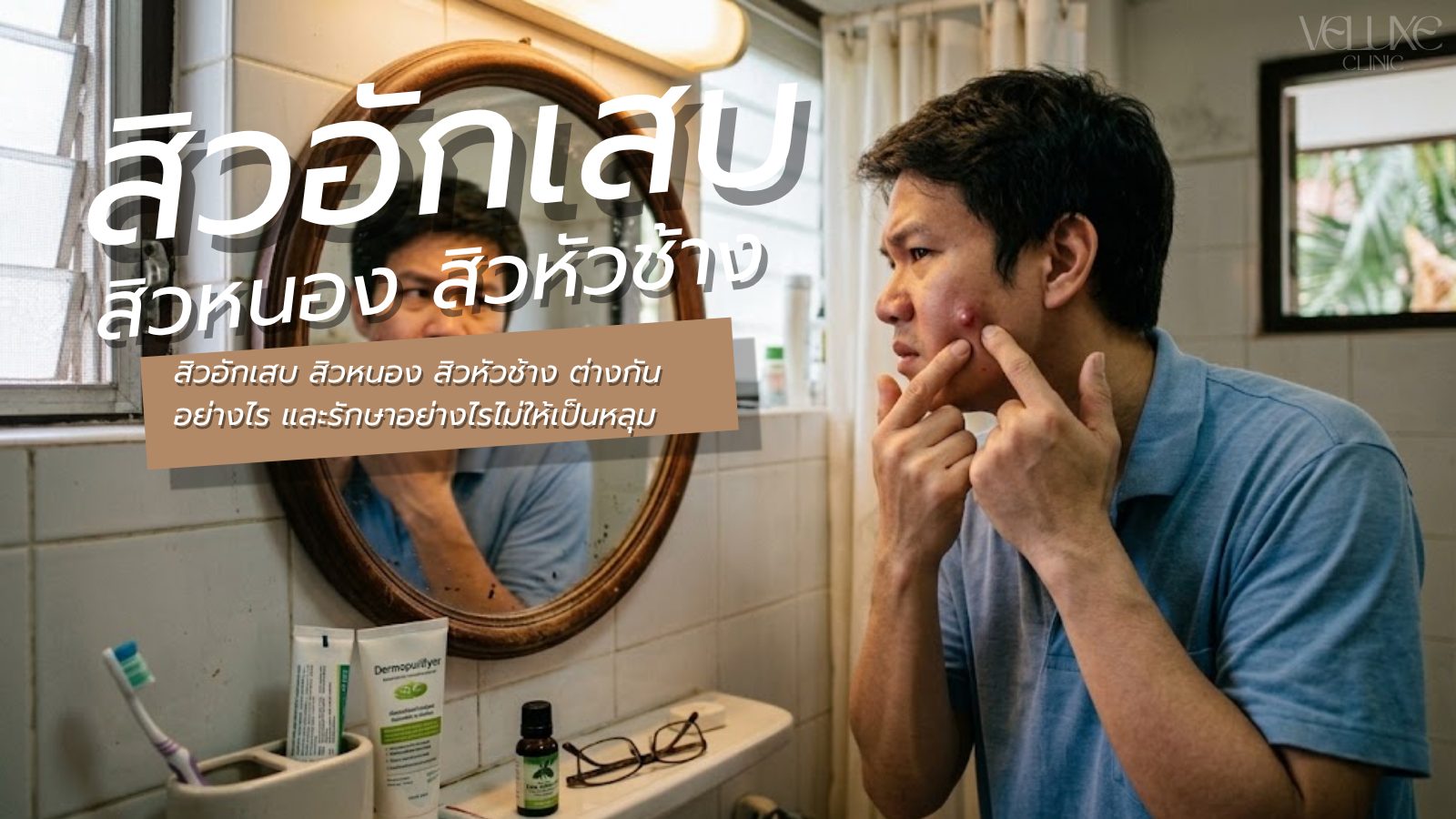
Inflamed acne is the point where you must act quickly, because the longer and deeper the inflammation, the higher the chance of a permanent scar — and acne scars are many times harder to treat than the acne itself.
What is inflamed acne
When comedones are left alone, bacteria Cutibacterium acnes multiply in the oxygen-poor environment. The body sends white blood cells to deal with them, causing redness, swelling, pain and pus.
4 levels of severity
| Type | Appearance | Depth | Scarring risk |
|---|---|---|---|
| Papule Papule | Raised and red, no head, slightly painful | Shallow | Low |
| Pustule Pustule | White or yellow head in the centre | Shallow–medium | Moderate |
| Nodule Nodule | Hard, large, very painful lump with no head | Deep | High |
| Cyst Cyst | Soft lump with deep pus, very painful | Deepest | Very high |
⚠️ Nodules and cysts need a doctor These two are too deep for topical treatment to reach and are the main cause of permanent acne scars. Don't wait for them to “go down by themselves” — by then the damage under the skin is already done.
Why it becomes inflamed
- Leaving comedones too long until bacteria multiply
- Squeezing or picking ruptures the pore wall and spreads inflammation
- Hormonal fluctuations more and thicker oil
- Stress and lack of sleep weaken the immune system's ability to control inflammation
- Irritating products damage the skin barrier
Treatment by level
| Level | Approach |
|---|---|
| Mild A few red papules | Benzoyl peroxide or adapalene, used consistently |
| Moderate Pustules across the face | Topical treatment with a short course of oral antibiotics + extraction of remaining comedones |
| Severe Nodules, cysts | Anti-inflammatory injections for individual spots, and consider isotretinoin |
| After acne settles | Treat red marks, dark marks and scars with laser or other procedures |
What are acne injections, and do they work
is injecting a diluted steroid directly into a large inflamed spot to reduce inflammation quickly.
- Settles quickly Usually visible within 24–48 hours
- Lowers the chance of scarring because inflammation is stopped before it destroys tissue
- Suits Nodules, cysts or a large spot before an important event
⚠️ Limitation: injecting too often or too strongly can cause a small dent in the skin from shrinkage of the fat under the skin. It usually recovers in 2–6 months but can be permanent in some cases, so it must be done by a doctor who controls the concentration and amount — not injected into every spot.
Things you must never do
- Squeezing inflamed spots without a head — the most dangerous: it drives inflammation deeper and almost certainly scars
- Dabbing toothpaste or fresh aloe vera on spots — irritating, and does not kill bacteria
- Using someone else's antibiotics — risk of resistance and the wrong type
- Scrubbing to “make spots come off” — spreads inflammation
- Applying several strong actives at once — damages the skin and makes inflammation worse
Preventing scars
Treat early
The longer it is inflamed, the higher the chance of scarring. Don't wait for it to spread.
Hands off
The one factor you control 100% yourself, and the one with the most impact
use sunscreen every day,
Reduces dark marks and helps skin repair itself better
Deal with large spots immediately
Nodules and cysts should be injected by a doctor, not left alone
Consult an experienced doctor at Veluxe Clinic Chiang Mai
Our medical team is ready to assess your skin and design a treatment program just for you. Ask for details via LINE OA — consultations are free.
Book a free consultation →