📋 Contents
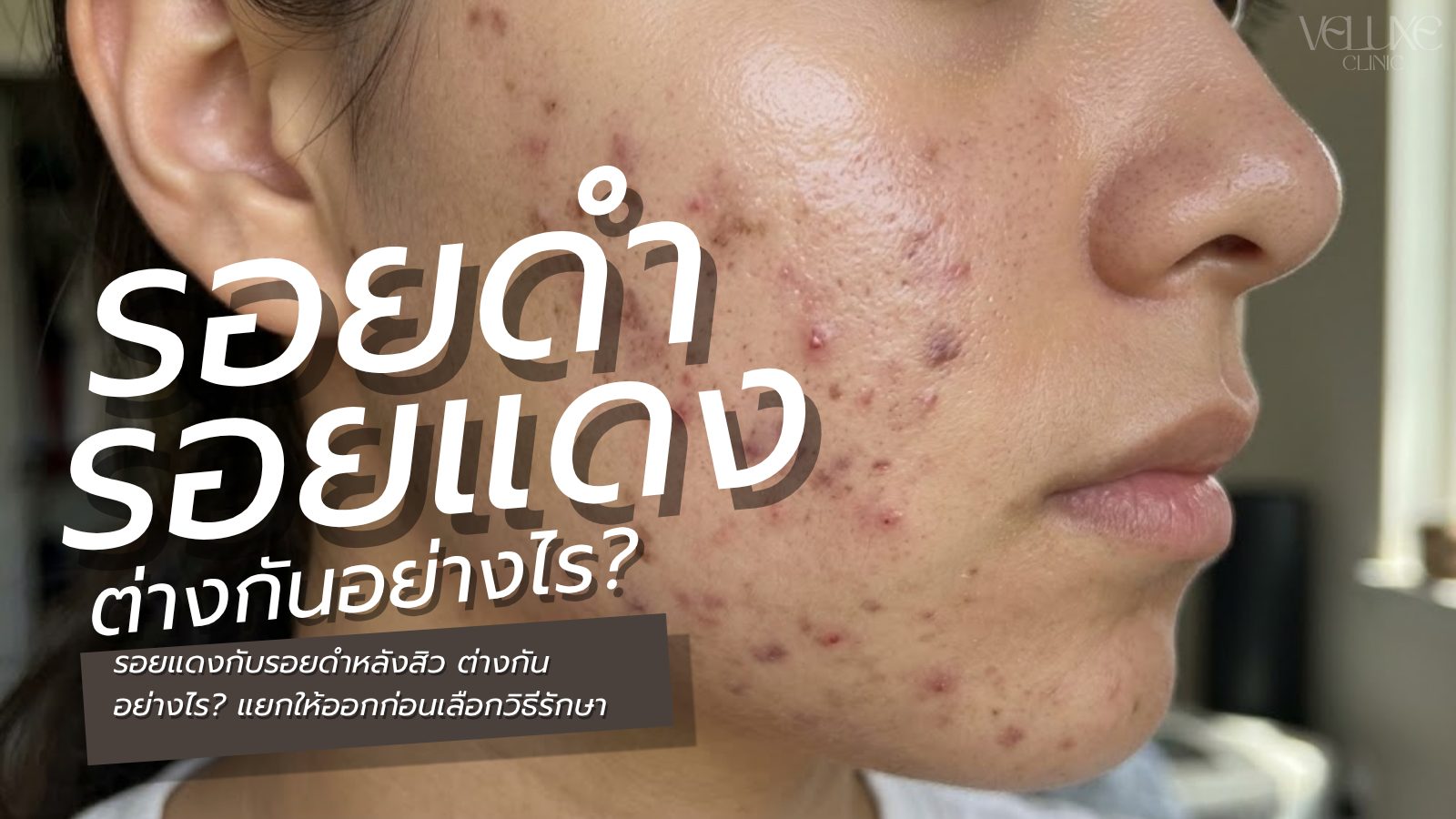
Many people use acne-mark creams for a year without improvement. Usually it's not because the cream is bad, but because they're using the wrong type for their mark — red marks and dark marks need different approaches.
2 types of acne marks people often confuse
| Topic | PIE (red marks) | PIH (dark marks) |
|---|---|---|
| Full name | Post-Inflammatory Erythema | Post-Inflammatory Hyperpigmentation |
| Colour | Red, pink, purple | Brown, grey, black |
| Cause | Dilated, damaged capillaries | Excess melanin production |
| Common in | Fair, thin skin | Asian, darker skin |
| Fades on its own? | Yes, but slowly | Yes, but more slowly |
How to tell them apart yourself in 5 seconds
💡 Press test: Press lightly on the mark with a finger and observe
• The mark fades or disappears when pressed → it's PIE (a red mark) (because blood is pushed out of the vessels)
• The mark stays the same → it's PIH (a dark mark) (because the pigment is in the skin, unrelated to blood)
Another way is to look at the colour in natural light — red marks are pinkish-purple, while dark marks are brownish-grey.
What causes red marks (PIE)
When inflammation occurs, the body dilates capillaries to send white blood cells for repair. If inflammation is severe or prolonged, these capillaries become damaged and stay dilated, visible as red marks.
Factors that make it worse: squeezing or picking, thin skin, irritating products, hot weather and drinking alcohol.
What causes dark marks (PIH)
Inflammation stimulates melanocytes to produce more pigment to protect the skin. Excess pigment remains in the skin layers, visible as dark marks.
⚠️ Asians are at higher risk: skin with more melanin responds to inflammation by producing more pigment. That's why Thai people are more often left with “dark marks” after acne, while fair-skinned people are more often left with “red marks” — and why extra care with sun and inflammation is needed.
How treatment differs
| PIE (a red mark) | PIH (a dark mark) | |
|---|---|---|
| Active ingredients | Niacinamide, Centella, Azelaic Acid | Vitamin C, Tranexamic Acid, Arbutin, Niacinamide |
| Topical treatment | Azelaic Acid | Hydroquinone (as prescribed), retinoids |
| Procedures | Vascular lasers, IPL | Pico Laser, Chemical Peeling |
| Most important | Reduce inflammation, don't re-trigger it | Strict sun protection |
💡 If you remember just one thing, remember this: For Dark marks sunscreen matters more than every mark-fading cream combined, because UV directly stimulates pigment. Without sun protection, even the most expensive cream barely makes a difference.
How long it takes
Both types fade on their own if there's no repeated inflammation, but it takes a long time. Treatment shortens it greatly, and most importantly it prevents new marks forming on top.
Preventing marks
- Treat acne early Shorter inflammation means fewer marks
- Don't squeeze or pick The factor you can control 100%, with the biggest effect
- Apply SPF 30+ sunscreen daily Reapply every 2–3 hours outdoors
- Don't use irritating products on inflamed skin
- Strengthen the skin barrier with ceramides and HA
Consult an experienced doctor at Veluxe Clinic Chiang Mai
Our medical team is ready to assess your skin and design a treatment program just for you. Ask for details via LINE OA — consultations are free.
Book a free consultation →