📋 Contents
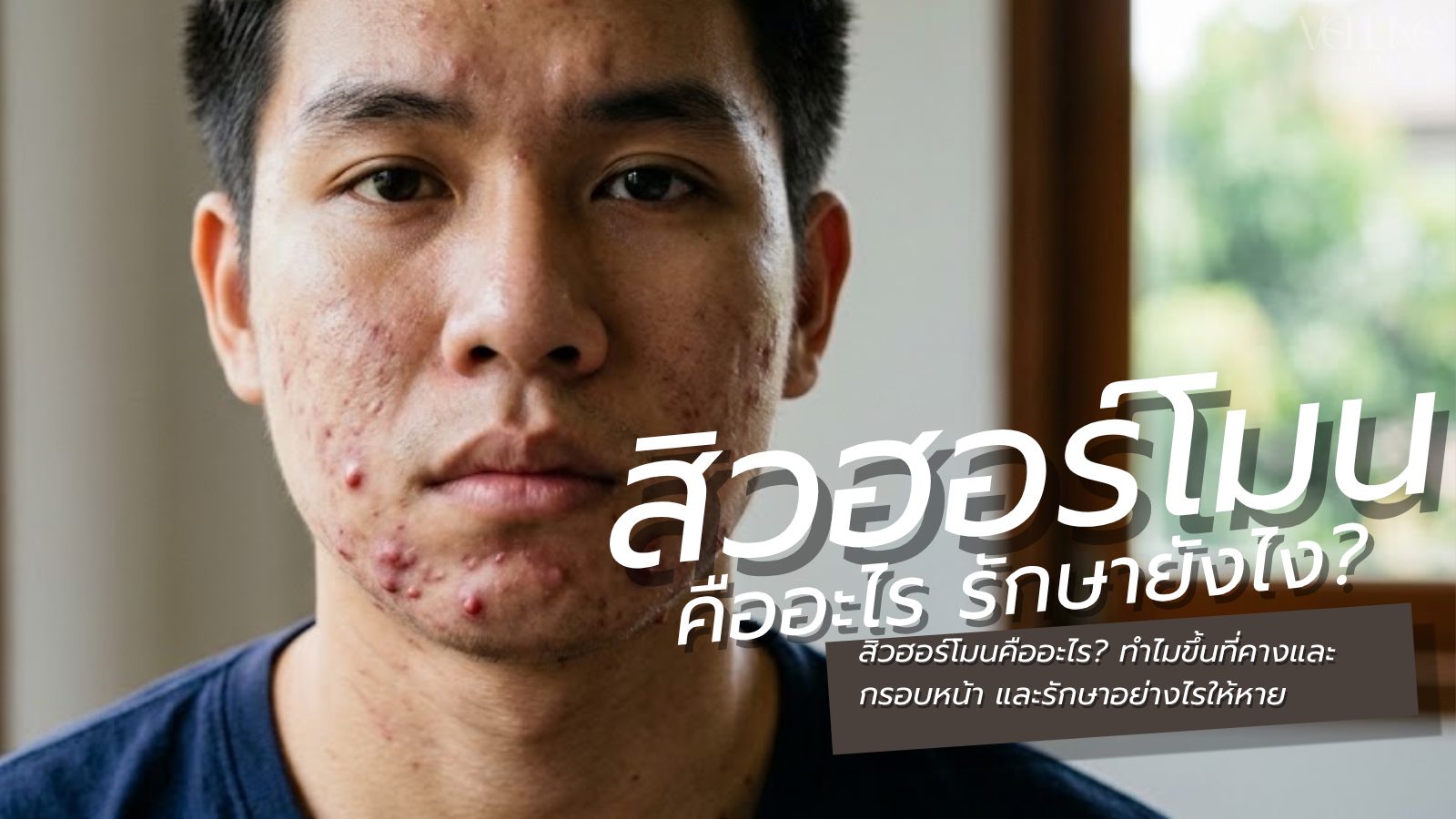
If you're over 25 and still getting acne, especially on the chin, jawline and neck, and it usually appears before your period, it's very likely hormonal acne.
It differs from teenage acne in location, appearance and treatment — which explains why the spot treatments that worked as a teenager no longer work.
What is hormonal acne
Hormonal acne is acne caused mainly by hormonal fluctuations in the body, especially androgens, the hormones that control the oil glands.
Research shows that as many as about half of women aged 20 and over have had this type of acne, so it isn't unusual and doesn't mean you care for your skin badly.
Signs it's hormonal acne
| Topic | hormonal acne. | Typical teenage acne |
|---|---|---|
| Location | Chin, jawline, neck | Forehead, nose, T-zone |
| Appearance | Deep, red, painful spots without heads | Blackheads, whiteheads, pustules |
| Timing | Recurs in the same place, before periods | Scattered, no pattern |
| Age range | 20–40 years | 13–19 years |
| Response to spot treatment | Often doesn't work | Usually works well |
Why hormones cause acne
Androgens rise
These hormones stimulate the oil glands to produce more oil than usual
Oil becomes thicker
Not just the amount but the quality of the oil changes, so it clogs more easily
Pores clog
Dead skin cells don't shed in time and combine with oil to form plugs
Bacteria multiply
The oxygen-poor environment suits bacterial growth, causing deep inflamed spots
Ages and times it usually appears
- 7–10 days before your period — when hormones change the most
- Times of heavy stress — cortisol indirectly stimulates the oil glands
- Stopping or starting contraceptive pills
- Pregnancy and after childbirth
- PCOS which often comes with irregular periods and excess hair
Treatment approaches
Hormonal acne differs from ordinary acne in that topical treatment alone is often not enough, because the cause is inside the body.
| Approach | Examples | When results show |
|---|---|---|
| Topical treatment | Adapalene, Benzoyl Peroxide, Azelaic Acid | 8–12 weeks |
| Oral hormonal medication | Some contraceptive pills, spironolactone | 3–6 months |
| Antibiotics | Used short term to control inflammation | 4–8 weeks |
| Isotretinoin | For severe cases or scarring risk | 2–4 months |
| Clinic procedures | Extraction, anti-inflammatory injections, laser | Supports the main treatment |
⚠️ Every medication above must be prescribed by a doctor, especially hormonal medication and isotretinoin, which have important contraindications and side effects — for example, isotretinoin is strictly forbidden in pregnancy because it causes birth defects. Never buy oral medication yourself or use someone else's.
💡 Be patient: hormonal acne takes at least 2–3 months to show clear results. Many people switch medication every 2 weeks thinking it isn't working, so nothing ever works.
How much lifestyle changes help
They genuinely help, but as a support, not the main treatment, in hormonal acne.
- Sleep 7–8 hours Lack of sleep raises cortisol
- Cut down on sugar and refined carbs High-glycaemic foods stimulate insulin, which is linked to androgens
- Cut down on cow's milk especially skimmed milk, which research has linked to acne
- Manage stress Regular exercise helps
- Don't pick or squeeze Hormonal acne is deep, so squeezing scars very easily
When to see a doctor
- Deep, painful spots recurring in the same place for more than 3 months
- No improvement after 8–12 weeks of over-the-counter topical treatment
- You start to see scars or dark marks
- Irregular periods, excess hair or unusual weight gain as well
- Acne affects your confidence and daily life
Consult an experienced doctor at Veluxe Clinic Chiang Mai
Our medical team is ready to assess your skin and design a treatment program just for you. Ask for details via LINE OA — consultations are free.
Book a free consultation →