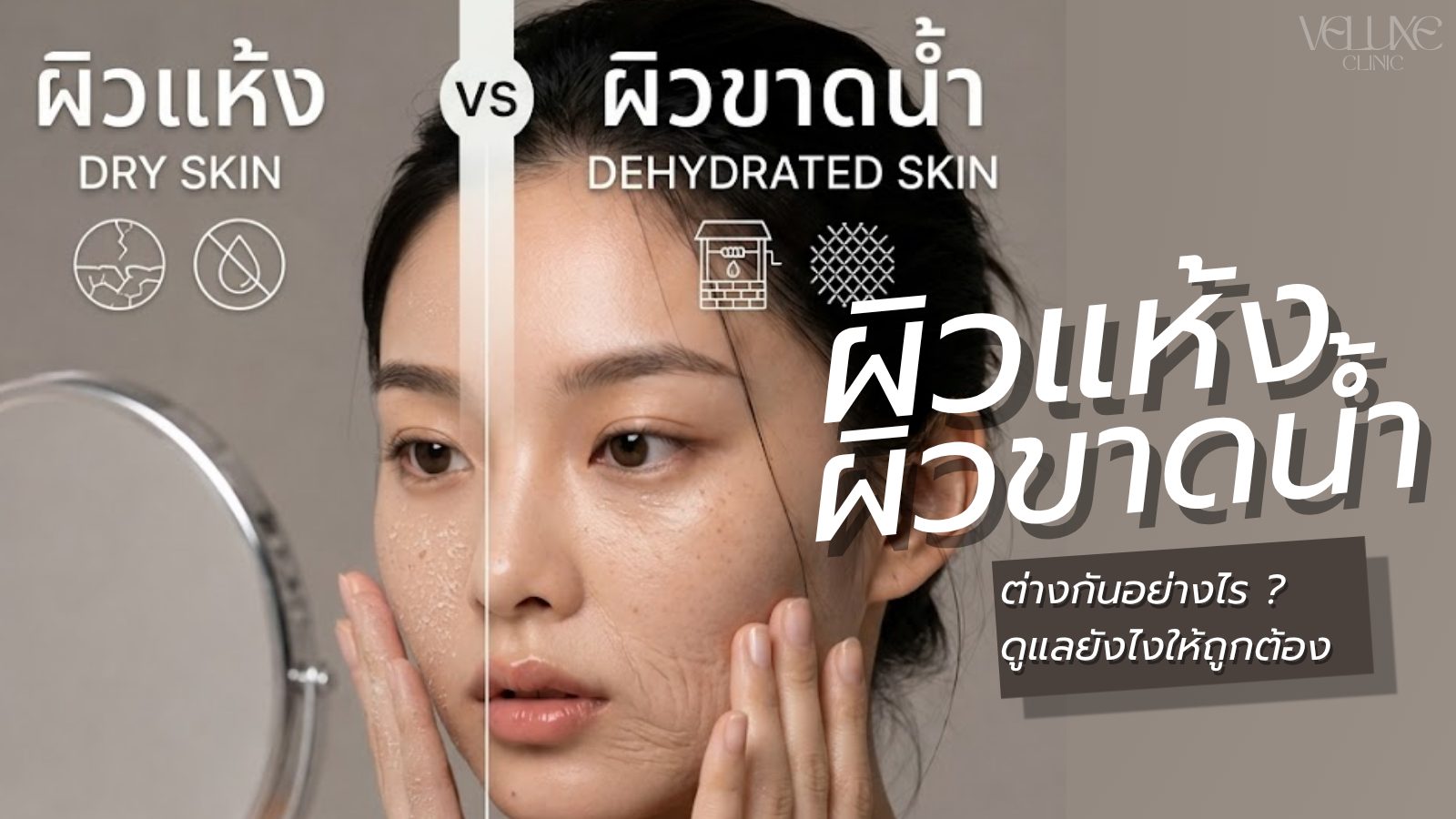
Infographic comparing dry and dehydrated skin
Skin layers and the difference between lipids and waterMain differences
| Dry skin | Dehydrated skin | |
|---|---|---|
| Appearance | A skin type (genetic) | A skin condition (temporary) |
| What's lacking | Lipid (Ceramide, Oil) | Water (H2O) |
| Who gets it | Naturally dry skin | Every skin type, including oily |
| Treated with | Ceramide, Oil, Occlusive | Humectant (HA, Glycerin) |
Dry skin
Dry skin is a skin type in which the oil glands produce less sebum than normal. The lipid layer is thin, so skin loses water easily and feels tight, dry and flaky.
Dry skin needs emollients (ceramides, fatty acids) and occlusives (petrolatum, squalane) to support the lipid barrier.
Dehydrated skin
Dehydrated skin isn't a skin type but a temporary condition when the epidermis lacks water. Oily skin can be dehydrated too. It's caused by drinking too little, dry air, washing too harshly or over-exfoliating.
TEWL graph: normal vs dry vs dehydrated skin
Differences in transepidermal water lossTest your skin
Pinch Test
Gently pinch your cheek and let go: if it springs back slowly = dehydrated; if it feels tight and thin = dry
Notice how skin feels after cleansing
Dry skin: tight and flaky immediately. Dehydrated skin: tight, but may become oily after 30 minutes
Fine lines under the eyes
Dehydrated skin shows fine lines more clearly for a while, especially under the eyes
The right care
| Steps | Dry skin | Dehydrated skin |
|---|---|---|
| Cleanser | Cream/Oil Cleanser | Gentle Gel Cleanser |
| Toner | Hydrating, alcohol-free | HA Toner, Glycerin Toner |
| Serum | Ceramide Serum | Layered HA serum |
| Moisturizer | Rich Cream + Face Oil | Light gel cream or sheet mask |
Consult an experienced doctor at Veluxe Clinic Chiang Mai
Our aesthetic medical team is ready to design a program just for you. Consultations are free.
Book a free appointment