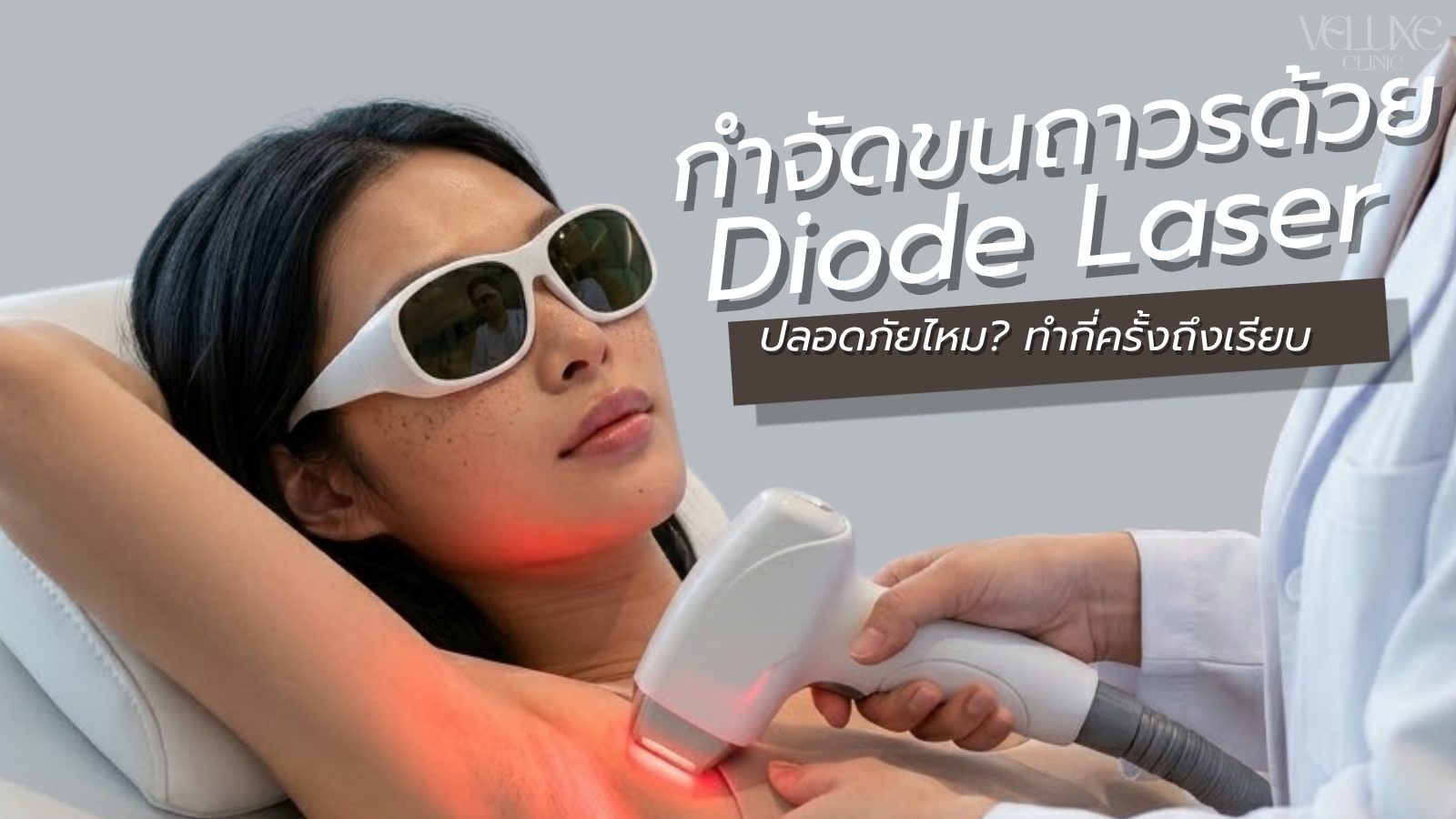
One problem many people deal with regularly is unwanted hair, whether underarm, leg, facial or elsewhere. Diode laser is the most popular technology for permanent hair removal because it's safe, low in pain and delivers genuinely lasting results. Let's understand it fully before you decide.

What is diode laser?
Diode laser is a laser with a wavelength of 808–810 nm designed specifically for hair removal. The laser energy is absorbed by melanin in the hair and follicle, creating heat that destroys the follicle directly without harming the surrounding skin.
Once the follicle is destroyed, hair doesn't grow back, leaving skin smooth in the long term. The method is recognised by the Food and Drug Administration (FDA) as safe and highly effective.
Which areas can be treated?
Diode laser can remove hair from almost any area of the body, including
- Face — moustache, beard, facial hair, chin, upper lip
- Underarms — the most popular area
- Arms and legs — full legs and arms
- Bikini line — the groin and surrounding area
- Back and chest — for men with thick hair
- Abdomen — the area above the navel
How many sessions until permanently smooth?
The most popular question! The answer is several sessions, because hair has a 3-phase growth cycle and the laser can only destroy hair in the anagen (growth) phase. of hair is in this phase,
📊 Average recommended sessions
— Underarms: 6–8 sessions
— Legs and arms: 6–10 sessions
— Face: 8–12 sessions
— Bikini line: 8–10 sessions
Sessions are 4–8 weeks apart depending on the area
After a full course, hair is reduced by 80–90%, and what remains is so fine and light you barely notice it.
Does it hurt? How safe is it?
Modern diode lasers have a cooling system in the handpiece, so treatment feels like a light rubber-band snap combined with a pleasant coolness — far easier to tolerate than repeated shaving.
For safety, diode laser meets international standards and suits almost every skin tone, especially the tanned Asian skin common in Thailand. The doctor always adjusts the energy to each person's skin tone.
Who shouldn't have diode laser?
- Pregnant or breastfeeding women
- People taking photosensitising medication
- Areas with tattoos or fresh wounds
- People with recent strong sun exposure or sunburn should wait 2–4 weeks for it to heal
- People prone to keloid scars should consult a doctor first
How to prepare
- Shave the area completely 1 day before your appointment (no plucking or waxing)
- Avoid sun for at least 2 weeks beforehand and apply SPF 50+ sunscreen daily
- No creams or lotions on the treatment area on the day
- Tell the doctor about any medication you are taking
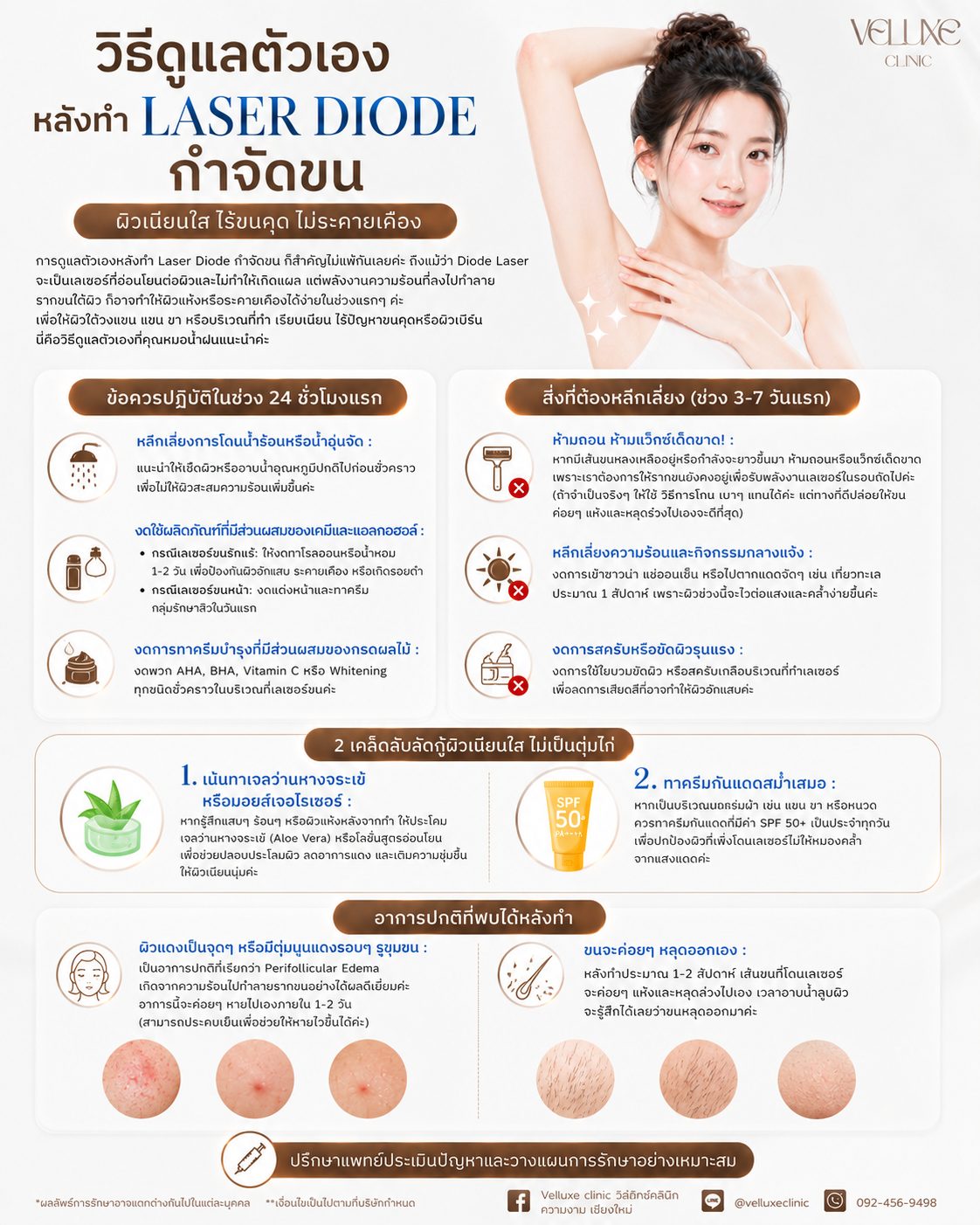
Aftercare
- Apply a hydrating moisturiser afterwards; skin may be slightly red for 1–2 hours, then settles
- Avoid direct sun for at least 2 weeks after treatment
- Apply SPF 50+ sunscreen daily when going out
- Don't rub or scratch the area for the first 24–48 hours
- Avoid sauna, swimming pools and heavy exercise for the first 24 hours
- Hairs gradually fall out on their own within 1–3 weeks — don't pull them
Diode laser vs other methods — a clear comparison
🪒 Shave — cheap, but hair regrows in 1–3 days and irritates the skin
🍯 Waxing — lasts 3–6 weeks, but painful and must be repeated forever
💡 IPL — uses intense pulsed light; suits fair skin but is less effective than laser on Asian skin
✅ Diode Laser — low pain, permanent results, suits every skin tone, the best long-term value
Interested in permanent hair removal with diode laser? Consult a Veluxe Clinic doctor for free!
Book now →