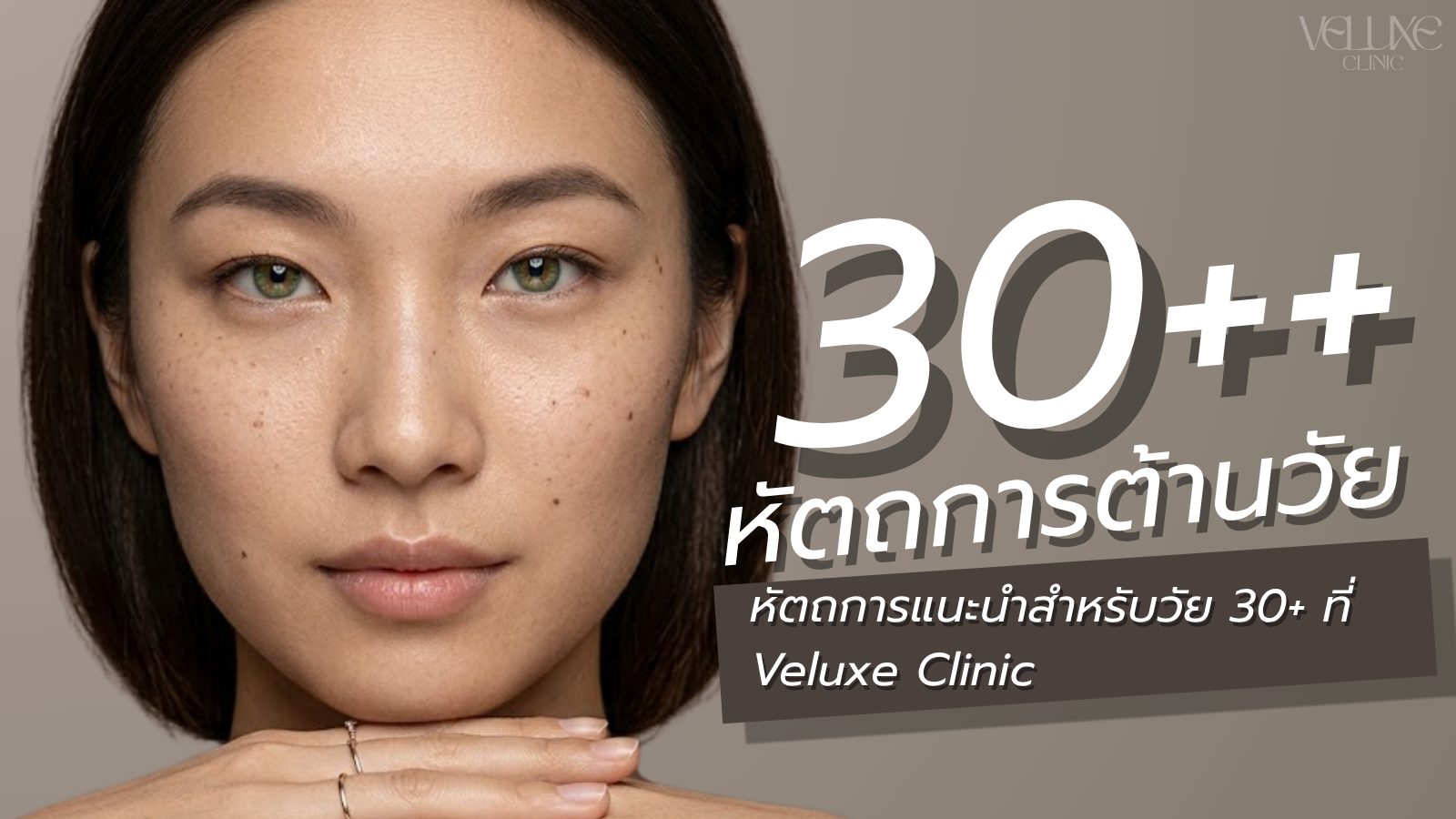
Age 30 is a turning point for skin. Collagen production starts to fall by about 1% a year, HA in the skin declines and skin recovers more slowly. The result is lines, sagging and a visible loss of radiance — but with today's technology, slowing ageing is easier and safer than you might think.
How does skin change after 30?
- Frown and expression lines become more obvious (forehead, between the brows, beside the eyes)
- Cheekbones and temples hollow, making the face look longer
- Dull skin that lacks radiance
- Larger pores and loss of firmness
- Under-eyes start to wrinkle, with eye bags
Recommended treatments for 30+ at Veluxe Clinic
1. Botox — softens expression lines
Suits lines caused by muscle movement, such as the forehead, between the brows and bunny lines. Results appear in 3–7 days and last 4–6 months, and it can stop lines deepening in the long term.
2. Filler — restores lost volume
Fills hollow or sagging areas such as the cheekbones, nasolabial folds, temples, lips and under-eyes for a younger look without surgery.
3. Ultraformer III — HIFU lifting
Suits skin that is starting to sag on the neck, cheeks and jawline. HIFU stimulates the SMAS layer — the same layer surgeons lift in a facelift. Results appear gradually over 1–3 months and last 1–1.5 years.
4. Skin boosters — renew skin from within
For dry, dull, tired skin, skin boosters such as Rejuran, Belotero Revive or P-Cell restore hydration and stimulate collagen for bright, youthful skin.
💡 Tip: at Veluxe Clinic we design combination treatment programs — combining several procedures for your concerns — for the best and most natural results.
Consult an experienced doctor at Veluxe Clinic
We're ready to design a skin care program just for you. Consultations are free.
Book a free appointment →